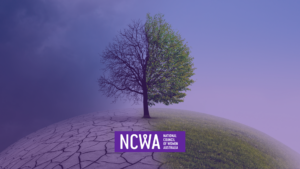

At COP30 the United Nations Secretary-General, Antonio Guterres said: “Protecting forests and oceans is not charity. It is a legal and moral responsibility. Let’s honour that duty. By safeguarding these foundations of life; investing in nature’s recovery, and ensuring that people and planet thrive together_ now and for generations to come.”(7/11.025)
ICW uses the United Nations definition of Habitat as human settlements and urban areas. We know there are other habitats where other species have their homes, like a tree, a forest or forested mountain ranges. The broader contexts for our human habitats are the ecosystems in which we live, which impact our habitats, and in turn we have impacts on those ecosystems.
Of course, globally we need to ”take urgent action to combat climate change’ (SDG 13). We need to consider also, more regional and local habitats and ecosystems, like water catchments and forested areas.
In places where there are likely to be more severe droughts, then how we store and manage water matters. This is happening for Tehran. Countries experiencing water supply stress are: Bahrain, Kuwait, Lebanon, Cyprus, Oman and Qatar. Management of water supplies, reducing over-extraction are important factors.
Typhoons (hurricanes or tropical cyclones) have been smashing into Vietnam, and have wreaked havoc in the Philippines. A news report about Cebu showed, once again, roads as raging rivers, homes and businesses inundated or smashed, and a brief reference to deforestation/ mass logging of forests. One report noted “For generations, Cebu was covered in thick mountain forests that protected the land. Those forests held the soil, absorbed heavy rain, and slowed down water before it reached the lowlands.” “Today, less than 2% of Cebu’s natural forest remains.”
“What we are seeing now is not just a natural disaster. It is the result of choices made long before the storm formed over the sea.” (Ref Cebu Technological University).
What happens in nearby habitats and ecosystems can and does have consequences elsewhere.
What happens to surviving women and girls if their home is smashed, they probably have no money, water is contaminated, and their losses would cause great distress and put them in vulnerable situations?
We need to examine and question regional and local governments about:
- Ensuring all people including women and girls receive sufficient early warning alerts.
- Retention or restoration of forests as critical habitats.
- Restoration of riparian zones, which are the zones along river banks and water courses.
- Keeping urban drains clear of debris and rubbish.
- Providing for flood outflow. For example, river silt build-up can choke river outflows.
- Providing for women and girls to have safe shelters in the aftermath of disasters.
National Councils of Women can take active roles in raising these issues regionally and locally.